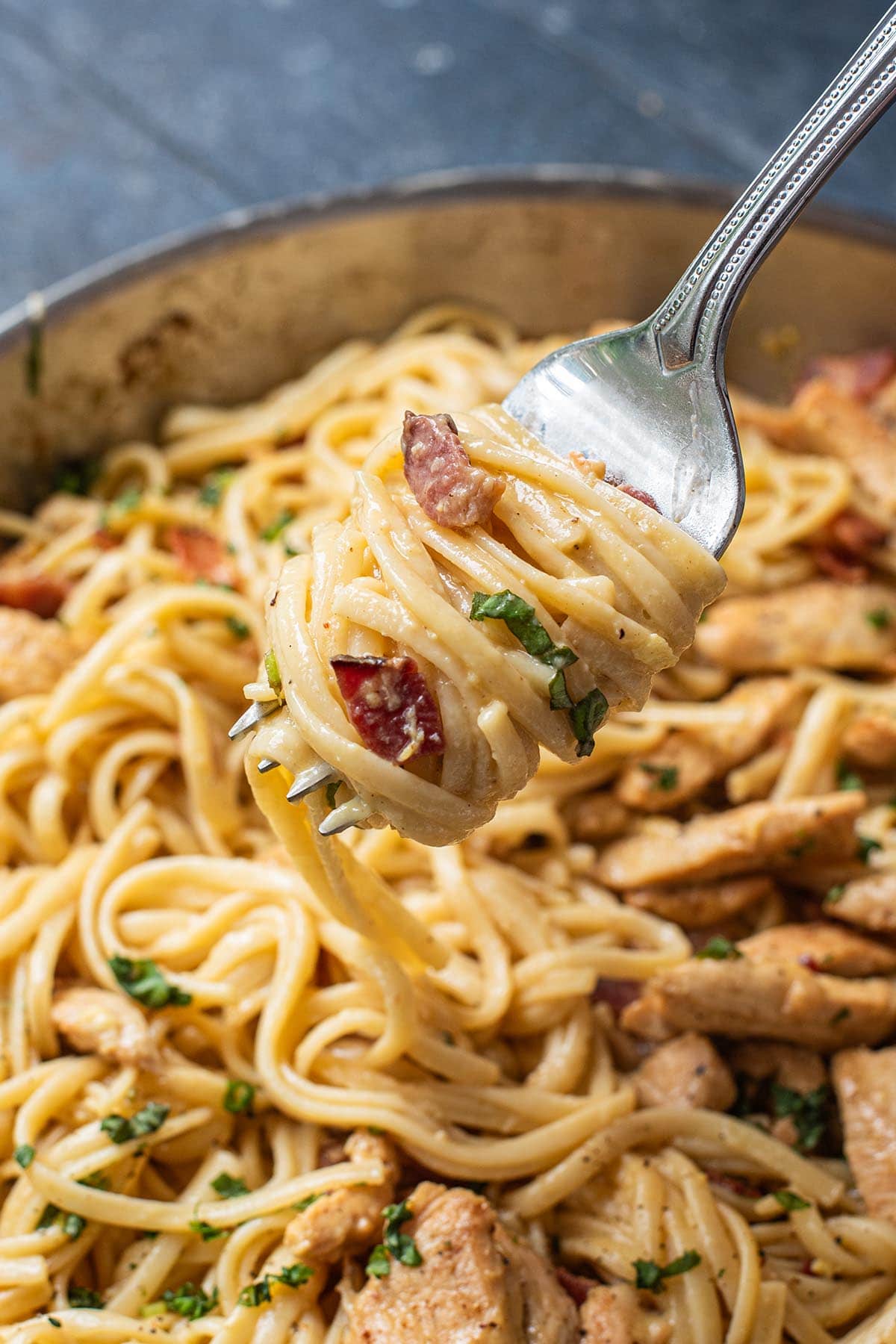
Chicken Carbonara: A Creamy, Hearty Twist on the Classic
Are you craving a dish that’s both indulgently creamy and wonderfully satisfying? Look no further than
Chicken Carbonara. This beloved pasta dish takes the rustic charm of traditional Italian carbonara and infuses it with a heartier, more comforting appeal, making it a staple in kitchens around the world. Imagine tender pieces of succulent chicken, crispy, smoky bacon, and perfectly cooked pasta, all enveloped in a rich, velvety sauce that clings to every strand. It’s a symphony of textures and flavors that promises to transform an ordinary weeknight into a special dining experience.
While its roots are deeply Italian,
chicken carbonara has evolved into a unique culinary creation, celebrated for its robust flavor profile and its ability to deliver restaurant-quality results right from your own kitchen. Whether you’re a seasoned cook or just starting your culinary journey, this dish offers an approachable yet incredibly rewarding experience.
The Culinary Journey: From Roman Tradition to American Comfort
To truly appreciate
chicken carbonara, it's essential to understand its origins and how it diverged from the classic. The story of carbonara is steeped in history, typically traced back to post-World War II Rome. Legend has it that American soldiers, with their rations of bacon and eggs, inspired Italian cooks to combine these ingredients with local pasta and Pecorino Romano cheese. The result was a simple, yet profoundly flavorful dish that became an instant classic.
The Authentic Roman Carbonara: A Symphony of Simplicity
The traditional Roman carbonara is a masterpiece of minimalist cooking. Its core ingredients are few:
guanciale (cured pork cheek), fresh eggs (often just yolks, or a mix of whole eggs and yolks), Pecorino Romano cheese, freshly ground black pepper, and pasta (usually spaghetti, rigatoni, or bucatini). Crucially, authentic carbonara contains **no cream, no garlic, and certainly no chicken**. The incredible creaminess that defines the dish comes solely from the emulsification of the egg, cheese, and a splash of starchy pasta water, creating a luxurious sauce that coats the pasta beautifully. It’s a testament to how humble ingredients, expertly combined, can yield extraordinary results.
The American Transformation: How Chicken Carbonara Was Born
As carbonara traveled beyond the borders of Italy, it naturally began to adapt to local palates and available ingredients. In many American kitchens, the concept of a richer, more protein-packed pasta dish emerged, giving rise to
chicken carbonara. This adaptation introduced several key changes:
*
Chicken: The most obvious addition, tender pieces of chicken breast or thigh, elevate the dish from a side to a substantial main course.
*
Bacon or Pancetta: Guanciale, while irreplaceable in true Roman carbonara, can be hard to find outside Italy. Crispy bacon or pancetta (Italian cured pork belly) became popular, more accessible substitutes, lending their smoky, savory notes to the dish.
*
Cream: Many American versions incorporate a splash of heavy cream, cream cheese, or even milk into the sauce. While purists might recoil, this addition undeniably creates an extra-velvety texture and a richer mouthfeel, making the sauce more forgiving for home cooks to achieve.
*
Garlic and Herbs: Ingredients like minced garlic, fresh parsley, and basil are often added to enhance the aromatic profile, further distinguishing it from its minimalist ancestor.
This evolution isn't about correctness, but about culinary creativity and cultural adaptation.
Chicken carbonara might not be "authentic" in the strictest Italian sense, but it is undeniably delicious, satisfying, and has earned its place as a beloved comfort food. For a deeper dive into this fascinating culinary journey, explore
Chicken Carbonara: An American Spin on a Roman Classic.
What Makes Chicken Carbonara a Standout Dish?
The appeal of
chicken carbonara lies in its unique blend of familiar flavors and comforting textures. It’s a dish that feels both gourmet and homey at the same time, making it perfect for both everyday meals and special occasions.
Key Ingredients: The Heart of the Heartiness
The beauty of
chicken carbonara is how a few simple ingredients come together to create such a complex flavor profile:
*
The Chicken: Whether you opt for lean chicken breast or more flavorful chicken thigh, browning it to a golden crisp adds a wonderful textural contrast and deepens the savory notes of the dish. It transforms carbonara from a side dish into a complete, balanced meal.
*
The Cured Pork: Crispy bacon or pancetta forms the foundational layer of flavor, rendering fat that’s then used to cook the chicken and serve as the base for the sauce. The smoky, salty crunch is simply irresistible.
*
The Creamy Sauce: The sauce is where the magic happens. A mixture of eggs (often yolks for richness), grated cheese (Parmesan or Pecorino Romano), and frequently a touch of cream, it emulsifies with the hot pasta water and pork fat to create a smooth, luxurious coating. This sauce isn't just a topping; it's an integral part of every bite.
*
Fresh Pasta: Spaghetti, fettuccine, or linguine are popular choices, providing the perfect vehicle for the rich sauce and other ingredients.
The Creamy, Dreamy Sauce: Texture and Flavor
The sauce in
chicken carbonara is what truly sets it apart. Unlike many cream-based pasta dishes, the carbonara sauce, even with added cream, maintains a delicate balance. It's rich without being cloying, coating each strand of pasta with a silken texture. The egg yolks contribute a beautiful golden hue and an incomparable richness, while the cheese adds a sharp, salty depth. The interplay of smoky pork, tender chicken, and peppery notes creates a harmonious, deeply satisfying flavor profile that keeps you coming back for more.
Mastering Your Homemade Chicken Carbonara: Tips for Perfection
Achieving restaurant-quality
chicken carbonara at home is surprisingly straightforward, provided you follow a few key techniques.
Choosing Your Protein: Chicken and Cured Pork
*
Chicken: Boneless, skinless chicken breast is a lean choice, but chicken thighs offer more flavor and tend to stay juicier. Cut them into bite-sized pieces for even cooking.
*
Cured Pork: High-quality smoked bacon is readily available and provides a strong, familiar flavor. Pancetta, being unsmoked, offers a milder, more delicate savory profile, allowing other flavors to shine through. Choose what you prefer, but always render it until crisp.
The Sauce Secret: Preventing Scrambled Eggs
This is perhaps the most critical step to perfect
chicken carbonara. The goal is a silky sauce, not scrambled eggs.
1.
Temper the Eggs: Whisk your eggs and cheese in a bowl before combining them with hot ingredients. You can even add a small ladle of hot pasta water to the egg mixture, whisking constantly, to slowly bring up its temperature.
2.
Off-Heat Mixing: Once your pasta is cooked and drained (reserving plenty of pasta water!), add it directly to the pan with the cooked chicken and pork. Crucially, remove the pan from the heat *before* adding the egg mixture.
3.
Toss, Toss, Toss! Rapidly toss the pasta, chicken, and pork with the egg mixture. The residual heat from the pasta and pan will gently cook the eggs into a creamy sauce without scrambling them.
4.
Pasta Water is Gold: Gradually add splashes of the starchy reserved pasta water as you toss. This helps create the emulsification, achieving that perfect creamy consistency and ensuring the sauce adheres beautifully to the pasta.
For more detailed instructions and expert advice on achieving that perfect texture, check out
Mastering Easy Chicken Carbonara for Restaurant-Level Results.
Pasta Pointers and Perfect Pairing
*
Al Dente is Key: Cook your spaghetti, fettuccine, or linguine until it's just *al dente* – still firm to the bite. It will continue to cook slightly when tossed with the hot sauce.
*
Don't Rinse: Never rinse your pasta after draining. The starch on the pasta is vital for helping the sauce cling.
*
Pairing:
Chicken carbonara is a rich dish, so light accompaniments work best. A simple green salad with a vinaigrette or some steamed asparagus provides a refreshing contrast. A crisp, dry white wine like a Pinot Grigio or Sauvignon Blanc also complements the flavors beautifully.
Beyond the Basics: Customizing Your Chicken Carbonara
While the classic
chicken carbonara recipe is divine on its own, its versatility allows for delightful customizations.
*
Add Veggies: Incorporate sautéed mushrooms, tender peas, fresh spinach, or blanched broccoli florets for extra nutrition and color.
*
Spice it Up: A pinch of red pepper flakes added with the bacon can introduce a subtle warmth and kick.
*
Herb Power: Fresh basil or oregano can be added along with the parsley for a more complex herbaceous note.
*
Cheese Varieties: While Pecorino Romano and Parmesan are traditional, experiment with other hard Italian cheeses like Asiago or even a sharp cheddar for a different flavor profile.
*
Garlic Boost: If you love garlic, sauté a clove or two with the bacon before adding the chicken.
Conclusion
Chicken carbonara is more than just a deviation from a classic; it's a testament to the dynamic nature of cuisine. It takes the comforting essence of Italian pasta, the satisfying richness of cured pork, and the hearty appeal of chicken, uniting them in a creamy, flavorful embrace. Whether you're drawn to its creamy texture, its savory depth, or its satisfying heartiness,
chicken carbonara is a dish that delivers on all fronts. It’s an accessible, family-friendly meal that promises to become a cherished addition to your recipe rotation, proving that sometimes, a twist on tradition can be just as, if not more, beloved. So gather your ingredients, follow these tips, and prepare to indulge in a truly exceptional meal.