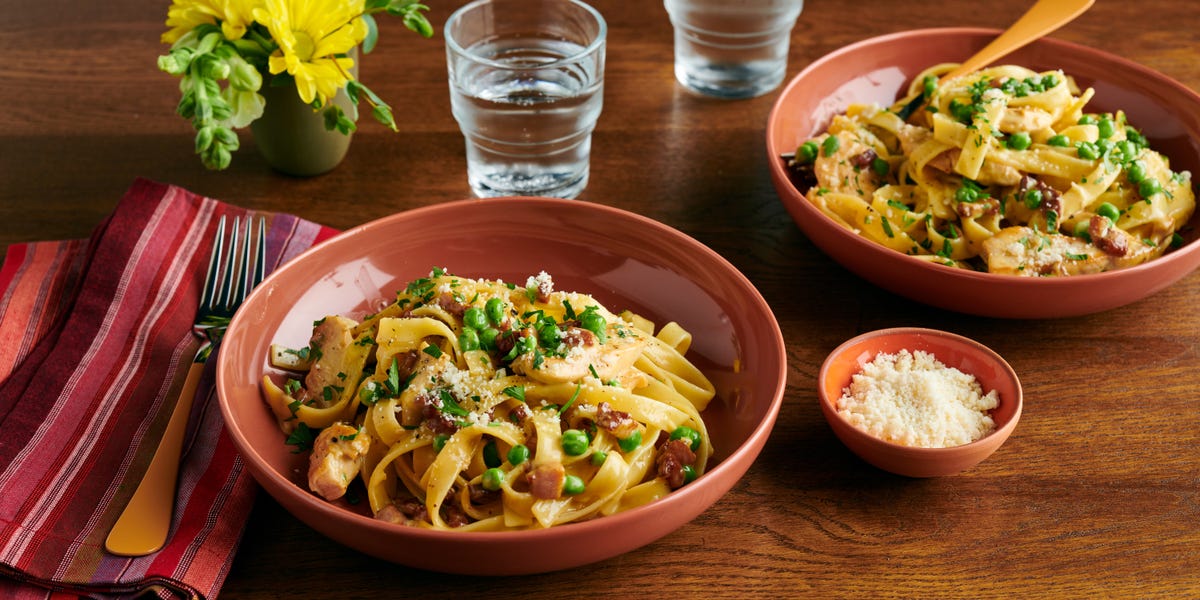
Craving a dish that perfectly balances creamy richness with savory depth and satisfying heartiness? Look no further than chicken carbonara. This beloved culinary creation is far more than just a simple pasta dish; it's a delightful fusion, a testament to how traditional recipes can evolve and adapt to new palates and preferences. While its origins lie firmly in the heart of Rome, the version featuring tender chicken and a lusciously creamy sauce has carved out its own significant niche in American kitchens, transforming a classic into a contemporary comfort food champion.
Imagine succulent pieces of chicken, crisp smoky bacon, and perfectly al dente pasta, all enveloped in a velvety, indulgent sauce. That's the allure of chicken carbonara – a dish that delivers on every promise of flavor and comfort. It bridges the gap between sophisticated dining and approachable home cooking, making it an irresistible choice for a weeknight meal or a special occasion. Join us as we explore the fascinating journey of this Roman classic and discover what makes its American cousin so uniquely irresistible.
The Roman Roots: Understanding Authentic Carbonara
To truly appreciate chicken carbonara, it's essential to first understand its venerable ancestor: the traditional Roman carbonara. This iconic dish is a masterclass in simplicity, proving that a few high-quality ingredients can yield extraordinary flavor. Most culinary historians trace its origins back to post-World War II Rome, an era when American soldiers stationed in Italy are believed to have introduced local cooks to rations like bacon and eggs. Italian ingenuity then combined these newfound staples with their own culinary traditions – pasta, Pecorino Romano cheese, and ample black pepper – to create the dish we know today.
The original carbonara is celebrated for its elegance and purity. It contains no cream, no garlic, and certainly no chicken. Its signature rich, creamy texture is achieved through a delicate emulsification process: hot pasta water, vigorously tossed with beaten eggs, grated Pecorino Romano (or Parmesan), and crispy rendered guanciale (cured pork jowl). The residual heat of the pasta gently cooks the eggs into a silken sauce, rather than scrambling them. This technique is what gives authentic carbonara its unique, almost magical, consistency – a testament to Italian culinary wisdom and the power of minimal, high-quality components.
The beauty of this classic lies in its bold, umami-rich flavor profile, driven by the salty, fatty guanciale and the sharp, tangy Pecorino. Understanding this foundational recipe provides the perfect backdrop for exploring how the dish transformed into the hearty, creamy delight known as chicken carbonara.
The American Transformation: What Defines Chicken Carbonara?
As carbonara journeyed across the Atlantic, it began to evolve, adapting to new culinary landscapes and ingredient availability. This is where chicken carbonara truly distinguishes itself, becoming a beloved staple in American kitchens. While some purists might debate its "authenticity," there's no denying its widespread appeal and delicious merits. This adaptation isn't about replacing tradition; it's about creating a new culinary experience that caters to different tastes.
The most prominent difference, as its name suggests, is the inclusion of chicken. Instead of strictly relying on cured pork for protein, tender chunks of sautéed chicken breast or thigh become a central component, transforming the dish into a more substantial, protein-packed meal. This makes it a complete, satisfying dinner without needing additional sides, aligning perfectly with American comfort food sensibilities.
Further distinguishing factors include:
- Pork Choice: Guanciale, while gaining popularity, isn't always readily available in every American grocery store. Consequently, crisp bacon or pancetta (Italian cured pork belly) often steps in as a familiar and equally delicious smoky base.
- The Cream Factor: Perhaps the most significant deviation from the Roman original is the common addition of a splash of heavy cream. This isn't just about indulgence; it adds a layer of stability to the sauce, making it more forgiving for home cooks and ensuring a consistently smooth, velvety texture without the risk of scrambling eggs.
- Flavor Enhancers: While traditional carbonara champions simplicity, American versions frequently embrace a broader palette of flavors. Garlic, sautéed with the bacon or pancetta, adds a fragrant aromatic depth. Fresh herbs like parsley or basil are often incorporated for brightness, and a pinch of crushed red pepper flakes can introduce a subtle warmth or fiery kick.
This blend of Italian-inspired technique with American comfort food elements makes chicken carbonara incredibly versatile and approachable. It's a fantastic option for those who enjoy a heartier pasta dish or are perhaps new to the world of carbonara and appreciate a more familiar flavor profile. To explore more about this delightful adaptation, you might enjoy reading our article: Chicken Carbonara: A Creamy, Hearty Twist on the Classic.
Crafting Your Perfect Chicken Carbonara: Tips and Techniques
Creating an exceptional chicken carbonara at home is surprisingly straightforward, especially with a few key techniques under your belt. The goal is to achieve that perfect balance of creamy sauce, tender chicken, and crispy pork, all coating your chosen pasta beautifully.
- Choose Your Proteins Wisely:
- Chicken: Boneless, skinless chicken breasts or thighs both work wonderfully. Thighs offer a richer flavor and stay moister, while breasts are leaner. Cut them into bite-sized pieces for even cooking and easy incorporation. Season them generously with salt, pepper, and perhaps a touch of paprika before searing until golden brown.
- Pork: Good quality thick-cut bacon, diced, provides a familiar smoky flavor. Pancetta, often found near deli meats, offers a slightly milder, more refined pork flavor. Render it slowly until crisp, then set aside, reserving some of the flavorful fat in the pan.
- The Art of the Creamy Sauce: This is where the magic happens.
- Egg Mixture: In a large bowl, whisk together egg yolks (or a combination of whole eggs and yolks for extra richness), freshly grated cheese (Parmesan is classic for its nutty, salty profile, but a blend with Pecorino Romano adds more bite), and plenty of freshly cracked black pepper.
- The Cream (Optional but Popular): If you prefer a more stable, indulgent sauce, whisk in a splash of heavy cream with your egg and cheese mixture. This helps prevent the eggs from scrambling and ensures a consistently luscious texture.
- Pasta Water is Key: Always reserve at least a cup of the starchy pasta water before draining. This liquid is gold! It helps emulsify the sauce, binding everything together into a glossy, smooth consistency.
- Pasta Perfection: While spaghetti is traditional, other long pastas like fettuccine, linguine, or bucatini (thicker, hollow spaghetti) are excellent choices as they allow the sauce to cling beautifully. Cook your pasta al dente – slightly firm to the bite – as it will continue to cook briefly when tossed with the sauce.
- Bringing it All Together – The Crucial Step:
- Once your chicken is cooked and bacon rendered, return the chicken to the pan (if not already there).
- Add the hot, drained pasta directly to the pan with the chicken and pork fat. Toss to coat.
- Crucially, remove the pan from the direct heat or turn the heat to its absolute lowest setting.
- Pour the egg, cheese, and cream mixture over the pasta. Immediately begin tossing vigorously with tongs, adding a splash of reserved pasta water as needed, until the sauce thickens and coats every strand. The residual heat from the pasta and pan will gently cook the eggs without scrambling them.
- Continue tossing until the desired creaminess is achieved. Stir in your crispy bacon (and perhaps some fresh herbs) at the very end.
- Flavor Boosters: Don't forget garlic! Sautéing minced garlic with your bacon or pancetta adds an incredible aromatic foundation. Fresh parsley or basil brightens the dish, and a pinch of red pepper flakes can add a delightful warmth.
By following these tips, you'll be well on your way to creating a restaurant-quality chicken carbonara right in your own kitchen. For more detailed instructions and an even easier approach, check out Mastering Easy Chicken Carbonara for Restaurant-Level Results.
Why Chicken Carbonara Continues to Charm
The enduring popularity of chicken carbonara isn't just a fleeting trend; it's a testament to its intrinsic appeal. This dish successfully combines the hearty satisfaction of a meat-centric meal with the comforting embrace of a rich, flavorful pasta. It embodies the best of both worlds: the comforting familiarity of American flavors married with the undeniable allure of Italian culinary technique.
Its charm lies in several key factors:
- Heartiness and Satisfaction: With tender chicken and savory pork, chicken carbonara is a truly filling meal. It provides ample protein and carbs, making it a robust choice that leaves diners feeling satisfied.
- Approachability: For many home cooks, the idea of traditional carbonara can seem daunting due to the precise emulsification without cream. The American spin, often incorporating a little cream, offers a more forgiving and consistently creamy result, making it a less intimidating dish to master.
- Versatility: Chicken carbonara offers a fantastic canvas for customization. From adding vegetables like peas or mushrooms to experimenting with different herbs or cheeses, it's a dish that encourages creativity in the kitchen.
- Family-Friendly Appeal: The combination of chicken, bacon, and creamy pasta is a universal crowd-pleaser. It’s a dish that often satisfies even the pickiest eaters, making it a go-to for family dinners.
- Elevated Comfort: While undeniably a comfort food, chicken carbonara feels a step above the everyday. It has a gourmet quality that makes it suitable for entertaining guests, yet it remains simple enough for a casual weeknight.
Ultimately, chicken carbonara thrives because it delivers on taste, texture, and satiety. It’s a dish that respects its origins while boldly forging its own identity, proving that culinary evolution can be a delicious endeavor.
From its humble Roman origins to its celebrated American adaptation, chicken carbonara stands as a shining example of culinary evolution. It’s a dish that takes the foundational elements of a beloved classic and reinterprets them through a new cultural lens, resulting in something uniquely delicious and widely cherished. Whether you're drawn to its creamy texture, its hearty components, or its rich, savory flavor, chicken carbonara promises a delightful culinary experience. It’s more than just a meal; it’s an invitation to savor a modern classic that beautifully marries tradition with innovation. So, gather your ingredients, fire up your stove, and prepare to indulge in this magnificent American spin on a Roman favorite.
